

Media
19 Feb 2026
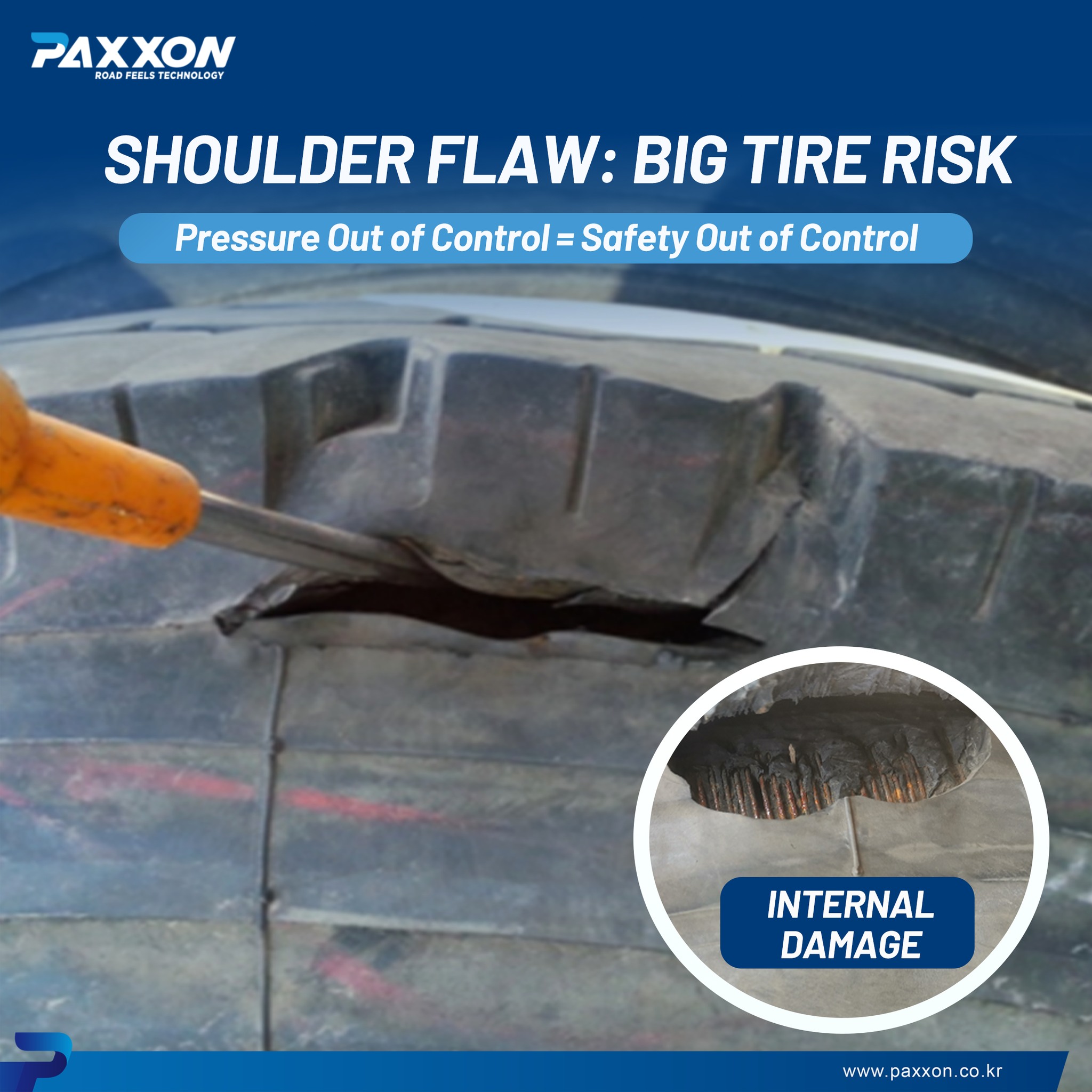
PAXXON Safety Guide: Identifying and Preventing Tire Shoulder Void
Stop equating tire issues solely with “tread wear”! In transport operations, the truly critical risk is often not tread wear, but structural damage hidden inside the tire. Tire shoulder void is far more dangerous than you might imagine.
Tire shoulder void occurs in the shoulder area of the tire, where adhesion between the tread rubber and the belt layers, or between the belt layers themselves, fails, resulting in internal delamination or voids, a structural defect.
Three Main Causes of Tire Shoulder Void
· Improper Use — Low tire pressure, overloading, or prolonged high-speed driving can cause the shoulder to overheat; hard braking or sharp turns generate strong shear forces, accelerating adhesive failure in the shoulder.
· Inadequate Maintenance — Misalignment or delayed tire rotation causes uneven wear and localized overheating; aging or external damage can compromise shoulder structure or degrade material performance.
· Manufacturing Issues — Poor rubber formulation or hardness, defective production processes, and insufficient adhesion of the belt layer can weaken overall shoulder stability, increasing potential risk.
Correct Prevention Measures
· Pressure & Load Management (Core) — Inflate tires to manufacturer’s cold pressure specifications and check daily. Fleets should install TPMS for monitoring. Strictly avoid overloading.
· Driving Discipline — Drive smoothly, control speed to reduce tire temperature, and slow down over rough roads.
· Systematic Maintenance — Rotate tires every 15,000–20,000 km according to standard patterns to balance wear. Check wheel alignment every 50,000 km or after severe impacts. Inspect shoulders daily for bulges, abnormal wear, or circumferential cracks.
· Selection & Replacement — Choose tires suited for operating conditions. Immediately stop using and replace any tire showing shoulder void.
PAXXON reminds you:
Tire shoulder void results from the combined effects of high load + high temperature. Precise control of pressure and load, combined with disciplined driving and regular maintenance, can extend tire life and safeguard your journeys.
back