Media
As winter approaches, the safety performance of truck tires becomes a critical factor that directly impacts transportation efficiency and driver safety.
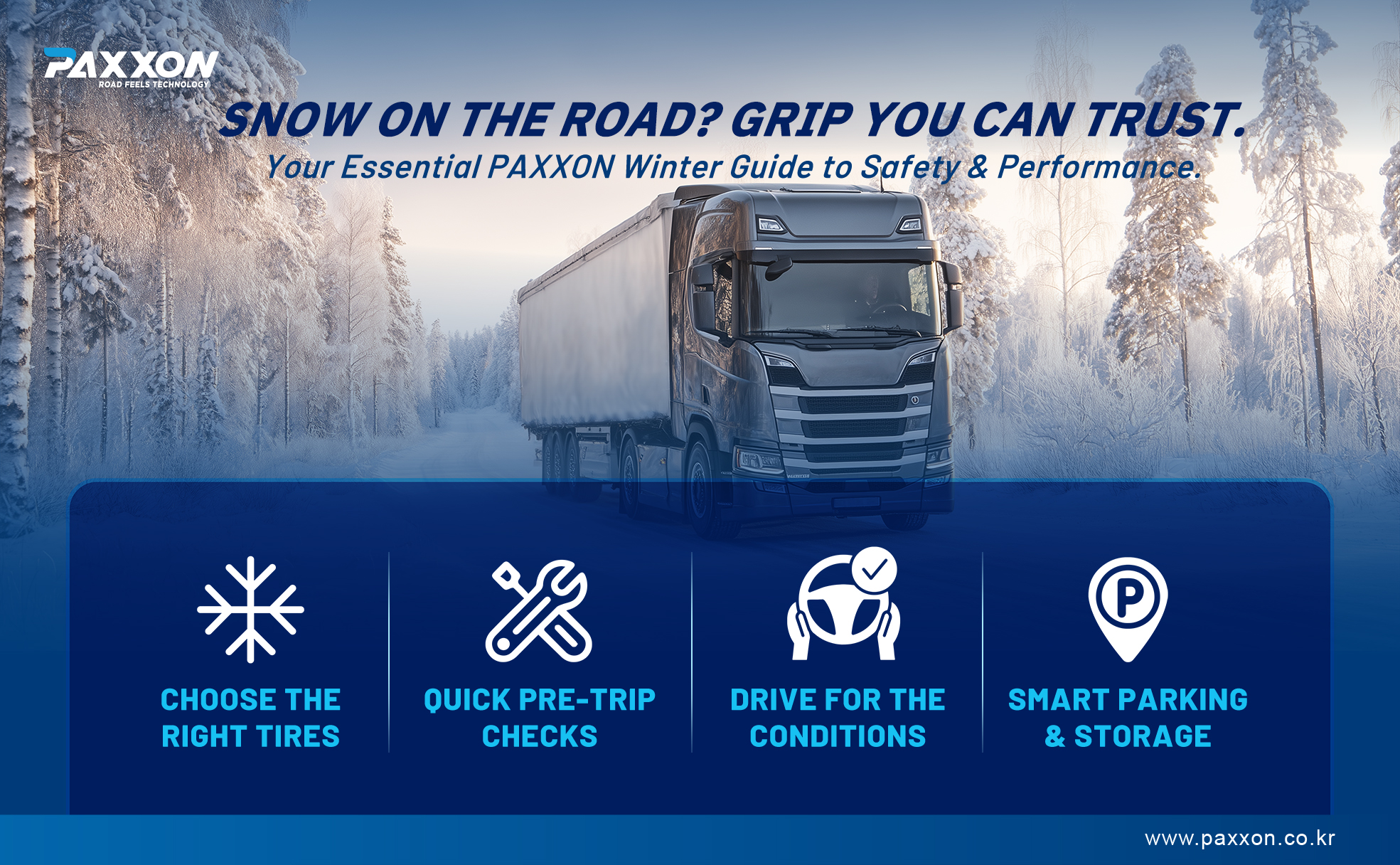
PAXXON has prepared essential winter maintenance guidelines for our customers across Europe:
1. Use the Proper Tires
Winter Tires (3PMSF Certified):
Required by law in countries such as Germany, Austria, Switzerland, the Czech Republic, and several Nordic regions during winter conditions—especially on drive and steering axles. Winter tires maintain elasticity at low temperatures and provide stronger grip on icy or snowy roads.
All-Season Tires:
Suitable for regions with mild winter climates. However, for routes involving mountains or severe cold environments, switching to winter tires is strongly recommended.
2. Quick Checks Before Departure
Tread Depth at least 4–5 mm:
Insufficient tread significantly reduces snow and water evacuation, increasing braking distance and the risk of skidding.
Check tire pressure when the tires are cold:
Low temperatures naturally reduce tire pressure, so frequent checks are necessary. Inflate tires strictly according to the manufacturer’s recommended values.
Inspect for External Damage:
Cuts, cracks, or bulges must be addressed immediately. Check the wheel rims for deformation or corrosion and ensure the valve stems are intact.
Spare Tire & Emergency Equipment:
Make sure the spare tire is also a winter tire or complies with local legal requirements. In mountainous regions with heavy snow, the use of snow chains may be mandatory.
3. Driving Tips in Winter
Drive smoothly, avoiding sudden braking or sharp steering maneuvers.
Increase following distance, as braking distance on icy or snowy roads can be several times longer than usual.
Watch out for black ice, especially on bridges, tunnel entrances, and shaded areas.
Use snow chains correctly: install them on drive tires before entering heavy snow and remove them promptly after leaving snowy areas.
4. Parking and Storage
Avoid parking on deep snow for extended periods. Place wooden boards or sand beneath the tires if needed.
If the vehicle is parked for an extended period, maintain proper tire pressure and move the vehicle regularly to prevent tire deformation.
Friendly Reminder
With the arrival of winter, be sure to replace your tires with winter tires in time to ensure proper grip and safety on icy and low-temperature roads.
Following the winter tire maintenance guidelines above will also help extend tire lifespan and effectively reduce operating costs.